The Hidden Cost of Delaying a Nevada Roof Replacement
Waiting for a leak to become a flood is a terrible financial strategy. Most homeowners in the desert think they can patch a small spot in the shingles and wait another year, but they’re essentially gambling with their foundation. In Nevada, where the sun bakes everything from noon until sunset and sudden monsoon rains can turn a small crack into a waterfall, the roof is the only thing keeping a house from becoming a very expensive sponge.
The problem isn’t the damage itself. The problem is the mental gymnastics people perform to avoid the bill. They see a pile of shingles in the driveway and think, “I can handle that for another season.” But a roof is a system. Once one part fails, the structural integrity of the whole house begins to drift. You aren’t just paying for shingles; you’re paying to keep your drywall from turning into mush.
If you wait until the water is dripping onto your living room rug, you’ve lost all your leverage. You’re no longer shopping for the best deal; you’re shopping for whoever can get a crew to your house by tomorrow. That desperation is where the real money is lost. It’s better to be proactive when the damage is visible but contained, rather than reactive when the damage is structural.
Why the Desert Climate Demands a Different Approach
Nevada weather is a punishing cycle of extremes. Intense ultraviolet radiation dries out asphalt shingles until they become brittle and lose their granules. Then, you get those sudden, heavy downpours that drive water into every microscopic gap. It’s a constant tug-of-war between the heat and the rain, and your roof is stuck in the middle of it.
Standard maintenance might work in a temperate climate, but the desert is different. The thermal expansion and contraction in the Valley are brutal on fasteners and seals. When the temperature swings fifty degrees in a single afternoon, the materials on your roof are literally moving. This movement eventually creates gaps that no amount of “patching” will fix long-term. You aren’t just fixing a leak; you’re fighting physics.
Homeowners often forget that the sun hits the roof harder than any other part of the house. This heat penetrates the attic, driving up cooling costs and stressing the roof’s structure. If your roof is aging, your air conditioner is likely working harder than it should be. A new roof isn’t just a shield against rain; it’s a thermal barrier that protects your entire indoor environment.
The real enemy is often the lack of a clear plan. People look at the price tag of a full replacement and freeze. They look at their savings and realize that a major capital expenditure like this can wipe them out. This is where the conversation shifts from “can I afford this?” to “how can I pay for this?”
The Reality of Financing Your Home Protection
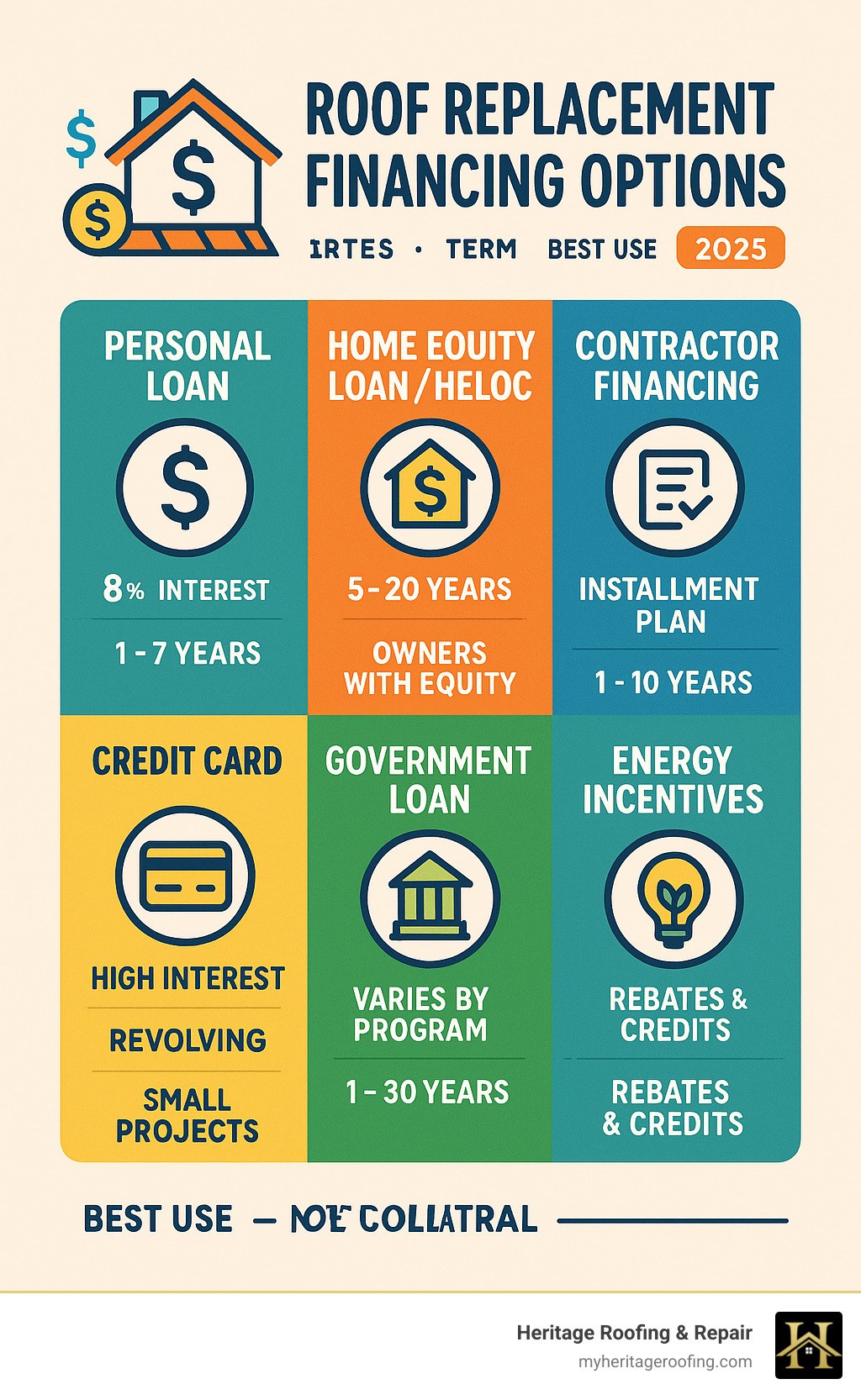
Financing a roof is not as scary as it sounds, provided you understand how it works. Most people think they have to walk into a bank and ask for a massive personal loan, which is rarely the case. There are several different paths you can take, and some are much friendlier to a monthly budget than others. You have to decide if you want to pay for the roof all at once or spread the cost over several years.
One common method is working directly with roofing companies that finance their projects. This is often the path of least resistance. The contractor has a relationship with a lender, and the application process is usually quick. It’s built for speed because contractors know that a homeowner worried about cash flow needs an answer fast so they can get the work started.
Then there is the traditional route through a Home Equity Line of Credit (HELOC). This allows you to tap into the value you have built up in your house. It often comes with lower interest rates than a personal loan, but it involves a lot more paperwork and a longer wait time. If your roof is leaking right now, a HELOC might be too slow, but if you are planning a replacement for next year, it is a very smart move.
Credit cards are an option, but they are generally a mistake. The interest rates will eat you alive, and you’ll end up paying for the roof three times over by the time you’re done. Avoid high-interest debt at all costs. Instead, look for fixed-term loans where you know exactly when the debt will be gone. Predictability is your best friend when managing a household budget.
| Financing Type | Speed of Approval | Interest Rate Profile | Ease of Use |
|---|---|---|---|
| Contractor Financing | Very Fast | Variable | High |
| HELOC | Slow | Relatively Low | Moderate |
| Personal Loan | Moderate | Moderate | High |
| Credit Card | Instant | Very High | Very High |
When you are comparing these options, don’t just look at the monthly payment. Look at the total cost over the life of the loan. A low monthly payment that lasts for seven years might seem attractive today, but the total interest you pay will be massive. It’s a classic trap that many homeowners fall into because they focus on the immediate impact on their paycheck.
Comparing the Main Ways to Pay
Deciding how to pay for a roof often comes down to a trade-off between speed and cost. If you have the cash sitting in a savings account, using it is almost always the best move because you avoid interest entirely. However, if using that cash leaves you without an emergency fund, you shouldn’t do it. Your roof is a necessity, but an emergency fund is a safety net for your life.
If you don’t have the cash, look at the structure of the debt. Fixed-rate loans are excellent because your payment stays the same every month. You won’t wake up one year from now to find out your interest rate has spiked, making your mortgage-sized payment even larger. This stability is worth its weight in gold in an uncertain economy.
Some people choose to use a specialized home improvement loan. These are designed specifically for projects like roofing or solar. They often have different terms than a standard personal loan and are easier to qualify for if you have a decent credit score. They are a middle ground between the speed of contractor financing and the low cost of a HELOC.
And then there are the “no-interest” promotions. You see these ads all the time: “0% interest for 12 months!” These are clever, but they are dangerous. If you do not pay off the entire balance within that window, the interest is often backdated to the very first day. You can end up owing a huge amount of money overnight. Only use these if you are absolutely certain you can pay the full amount before the clock runs out.
Hidden Costs You Should Anticipate
A roof is rarely just a pile of shingles. When you get a quote, make sure it includes the “extras” that often surprise people halfway through the job. In Nevada, this might mean dealing with specialized ventilation needs or extra layers of underlayment to handle the heat. If a contractor gives you a price that seems too good to be true, it probably is.
One thing people often overlook is the cost of disposing of the old materials. It’s not just about hauling away heavy, wet shingles; it’s about the fees associated with landfilling them. A professional crew should include the haul-away in their estimate. If they don’t, you’ll find yourself paying for a dumpster on top of the actual labor.
Another potential cost is the repair of surrounding structures. Sometimes, when a crew is working on the roof, they find that the fascia or the soffits are rotten. This is common in older homes. You should ask the contractor how they handle unexpected discoveries. Do they stop the work and give you a new quote, or do they just keep going and bill you later? Communication is the only way to stay on budget.
Finally, consider the impact on your insurance. Replacing a roof can sometimes change your premium. In some cases, it can actually lower it if you are upgrading to more impact-resistant materials. It is worth calling your agent to see if a new roof will make your policy more favorable. It’s a small step that could save you money every single month for years to come.
- Permit Fees: Some municipalities require specific permits for structural changes or material upgrades.
- Waste Management: The cost of removing and disposing of old, heavy materials.
- Material Surges: Prices for lumber and asphalt can fluctuate wildly during the summer months.
- Access Issues: If your house has a steep pitch or difficult access, expect a labor premium.
The Long-Term View of Home Maintenance
A roof is an investment in your home’s value. When you eventually decide to sell, a brand-new roof is one of the first things a home inspector will look at. A buyer will see a new roof and feel much more confident about their mortgage application. It’s a way to “pre-sell” the house by removing a major point of negotiation.
Think of it as a preventive measure for the rest of your assets. A leaking roof doesn’t just ruin the ceiling; it ruins the insulation, the electrical wiring, and the wood framing. The cost of a roof is high, but the cost of a flooded house is much, much higher. It is much cheaper to replace shingles than it is to replace a kitchen because of mold or water damage.
We often treat our homes like something we live in, rather than something we own. But a house is the largest asset most people will ever have. Treating it with respect means staying ahead of the decay. Dealing with the roof now, while you have the ability to choose your financing and your contractor, is the only way to ensure you stay in control.
Stop waiting for the rain to tell you when it’s time to act.
A few things readers ask
What are the common ways to finance a new roof in Nevada?
Homeowners can use personal loans, home equity lines of credit (HELOC), or specialized roofing contractor financing plans.
Are there any state-specific grants for roof repairs in Nevada?
While Nevada does not have a universal roof grant, low-income assistance may be available through local community action agencies or HUD programs.
Can I finance a roof through my homeowners insurance in Nevada?
Insurance typically only covers roof replacement if the damage was caused by a covered peril like hail or wind, rather than general wear and tear.
How does credit score affect roof financing options in Nevada?
A higher credit score is required for low-interest unsecured loans and specialized contractor financing, while lower scores may require a co-signer or a HELOC.
Is it better to use a personal loan or a HELOC for roofing in Nevada?
Personal loans offer faster approval for smaller projects, while a HELOC typically provides lower interest rates for large-scale roof replacements.